Call reporting that makes your prospecting crystal clear
Managing a prospecting team without data is driving blindfolded. How many calls were made yesterday? What time do your prospects pick up most? Which list converts, and which one wastes time? Flunter's call reporting answers these questions continuously. Your managers stop guessing and start deciding based on facts.
All your call activity at a glance
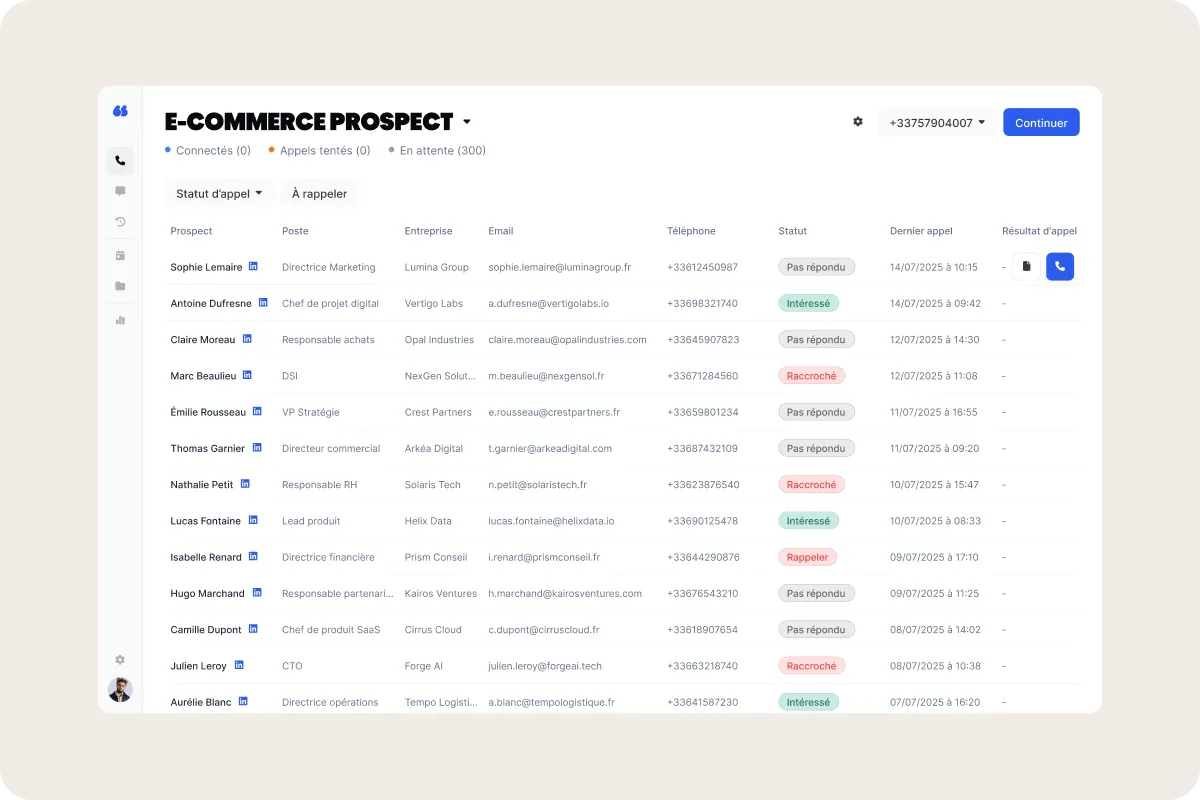
Flunter aggregates your teams' activity into clear dashboards: calls made, talk time, pickup rate, outcomes. At a glance, a manager sees how the day is going, who's on pace and where energy is being scattered. No more compiling spreadsheets by hand to piece together what happened.
Understand what gets people to pick up
Not all time slots are equal, and neither are all lists. Flunter's reporting reveals the trends: the hours your prospects answer most, the most productive days, the segments that convert. You adapt your campaigns to these realities instead of calling at random, and focus effort where it pays off.
From volume to results
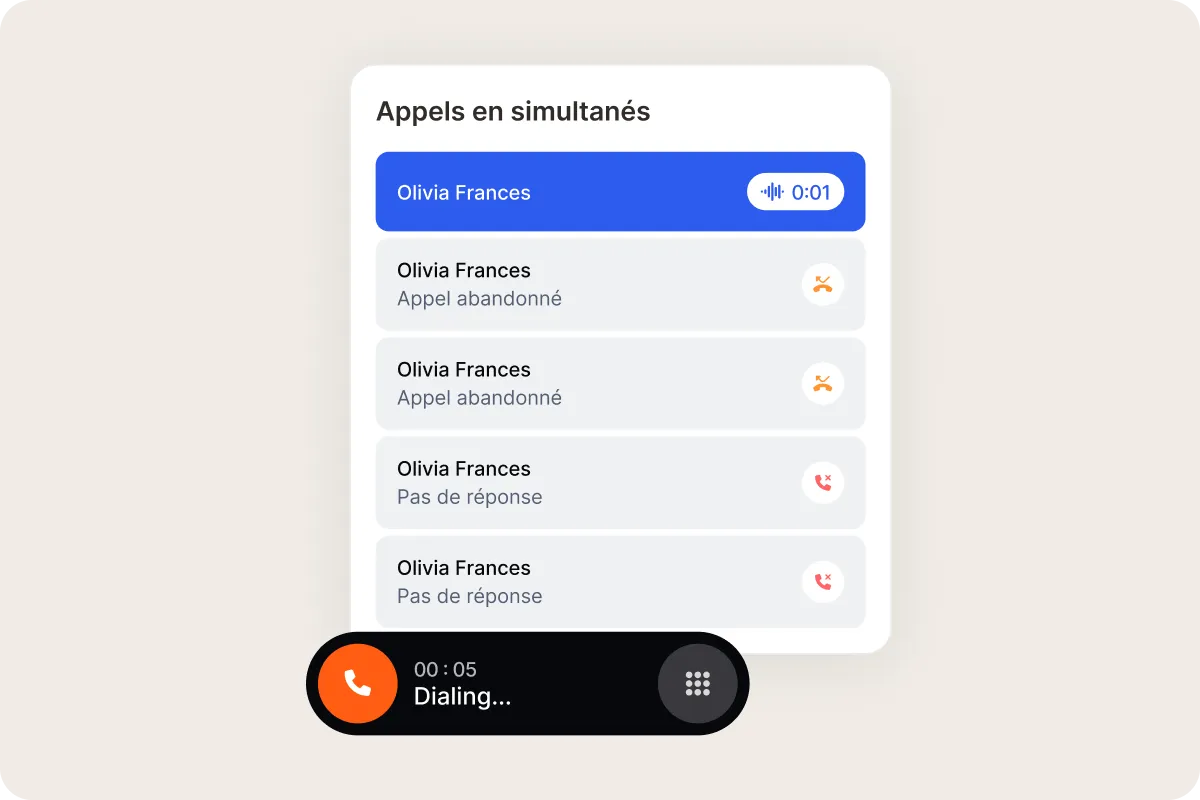
Making lots of calls means nothing if nobody tracks what they produce. Flunter ties activity to results: how many conversations, how many meetings, how many opportunities opened. You measure the real performance of your prospecting, not just the busywork.
Compare teams and campaigns
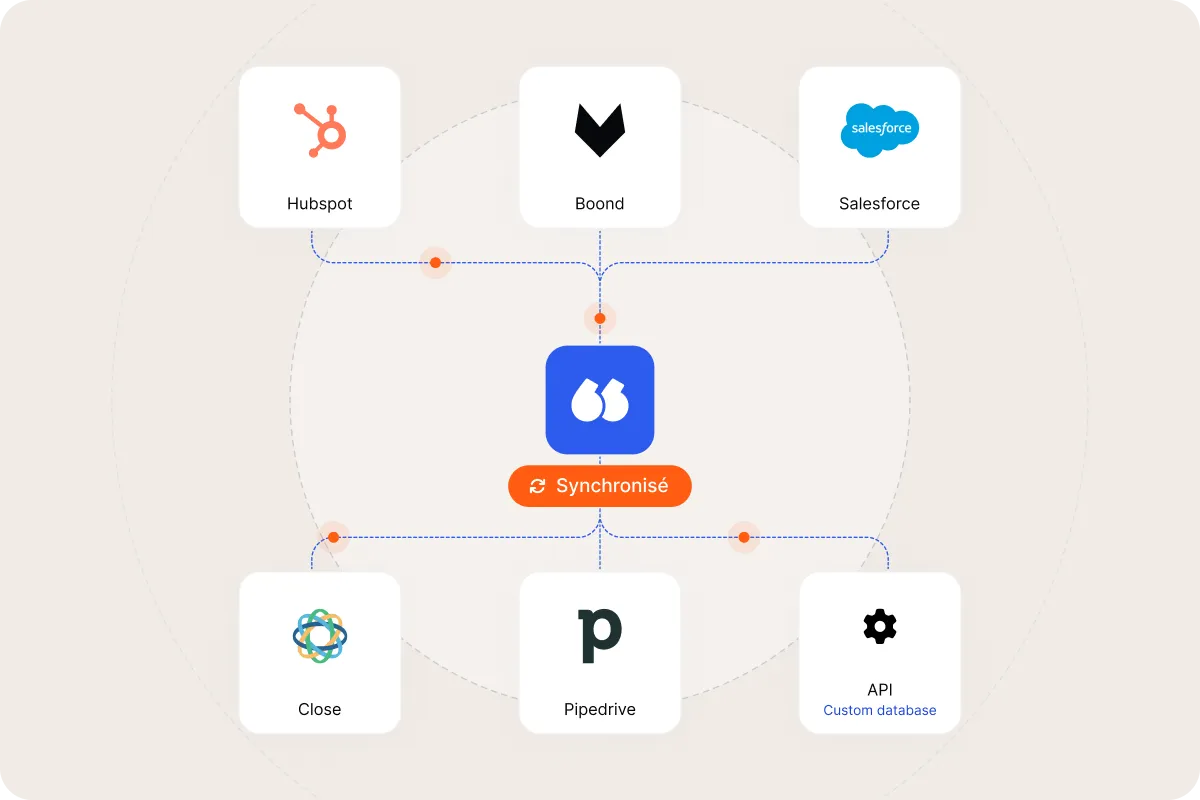
When you manage several reps or several campaigns, comparison is essential. Flunter's reporting lets you put performance side by side, identify best practices and quickly spot who needs a hand. Management becomes fair, grounded in numbers everyone shares.

Reliable data, no manual entry
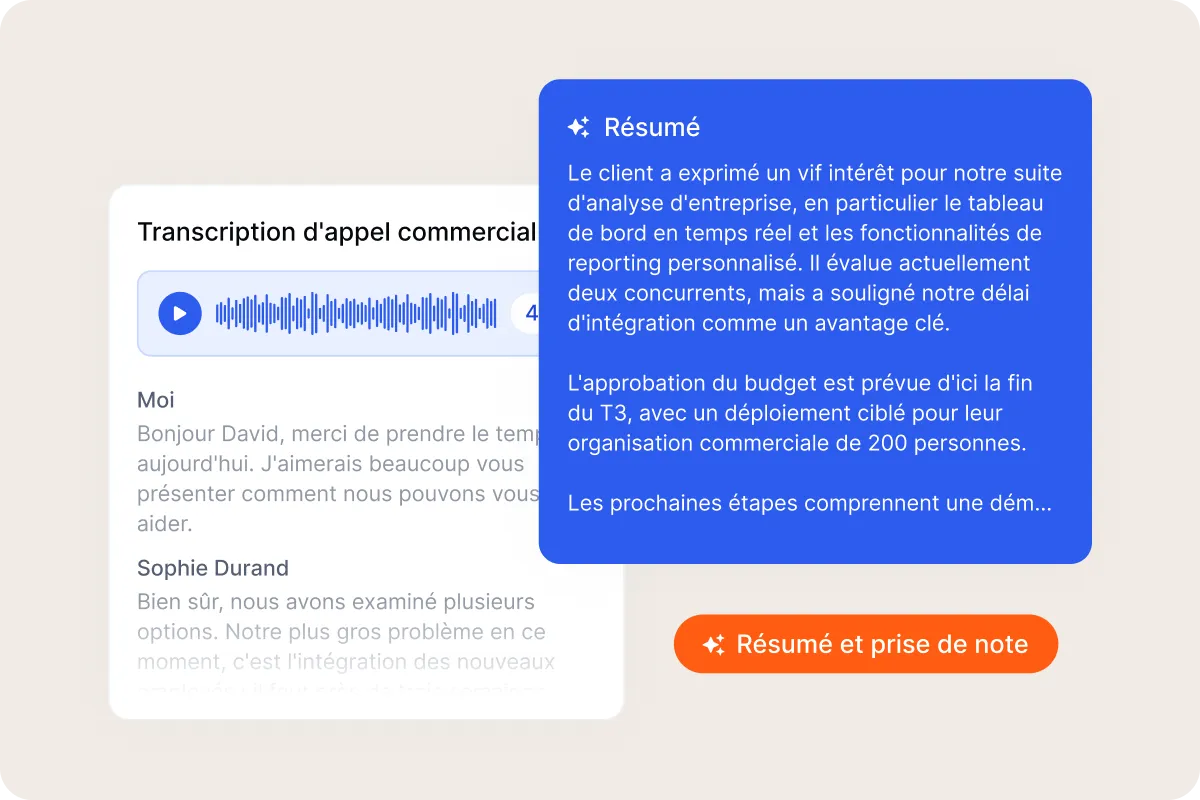
Reporting is only as strong as its data. Because Flunter automatically captures every call, every duration and every disposition, your stats don't depend on what reps remember to log. You work with accurate numbers, updated in real time.
Reporting that drives your decisions
Beyond day-to-day tracking, this data informs your big calls: team sizing, which segments to target, activity forecasts. Call reporting becomes as much a strategy tool as a hands-on management tool.
Catch weak signals in time
Good reporting doesn't just observe, it warns. By tracking activity continuously, Flunter helps you spot the changes that matter early: a pickup rate dropping on a list, a rep whose volume is slipping, a campaign running out of steam. Caught in time, these weak signals get fixed before they weigh on the month's results. Left until the end-of-period review, they turn into nasty surprises. That's the whole value of fresh, readable data: it gives you time to act. You move from management that reacts to the numbers to leadership that anticipates them, changing both the manager's stance and the team's peace of mind.